EVENTS
PAST EVENTS
For video recordings of past events please check out our Vimeo site
march, 2026

Event Details
Lisa Trever & Tim Trombley "On the Ground and in the Point Cloud: Recent Archaeological Research at Pañamarca, Peru" Friday, March 6, 2026, 4:30 PM -
more
Event Details
Lisa Trever & Tim Trombley
“On the Ground and in the Point Cloud: Recent Archaeological Research at Pañamarca, Peru”
Friday, March 6, 2026, 4:30 PM – 6:30 PM
807 Schermerhorn Extension
Register Here
Please note that all non-Columbia University affiliates must register for a QR campus access code.
The seminar will also be available on Zoom
Abstract
Built on a granite hill that rises over the lower Nepeña Valley of northern Peru, about ten miles from the Pacific Ocean, the monumental center of Pañamarca was a place of ancient artistic creativity and invention. Its makers’ choices in building practices—together with the area’s arid environment—have allowed for the survival of the site’s buried earthen architecture and vivid Moche-era mural paintings (ca. 650-800 CE), as well as organic objects and contexts. In this presentation, we share results from the last four years of the multidisciplinary Archaeological Landscapes of Pañamarca (Paisajes Arqueológicos de Pañamarca) research program. This project is designed to excavate, document, study, and conserve Pañamarca’s fragile painted architecture, as well as to understand the area’s environment and its changes over time. A key aspect of the project’s ongoing work has been multi-modal documentation, including 3D rendering and the creation of virtual environments that present novel affordances for ongoing investigation and potential for public access, interpretation, and conservation.
Biography
Lisa Trever is the Lisa and Bernard Selz Associate Professor in Pre-Columbian Art History and Archaeology and Director of the Columbia Center for Archaeology. She has conducted research at Pañamarca, Peru, since 2010.
Tim Trombley is a senior educational technologist in the Media Center for Art History at Columbia University. He is a specialist in immersive visualization design and media rich presentation platforms.
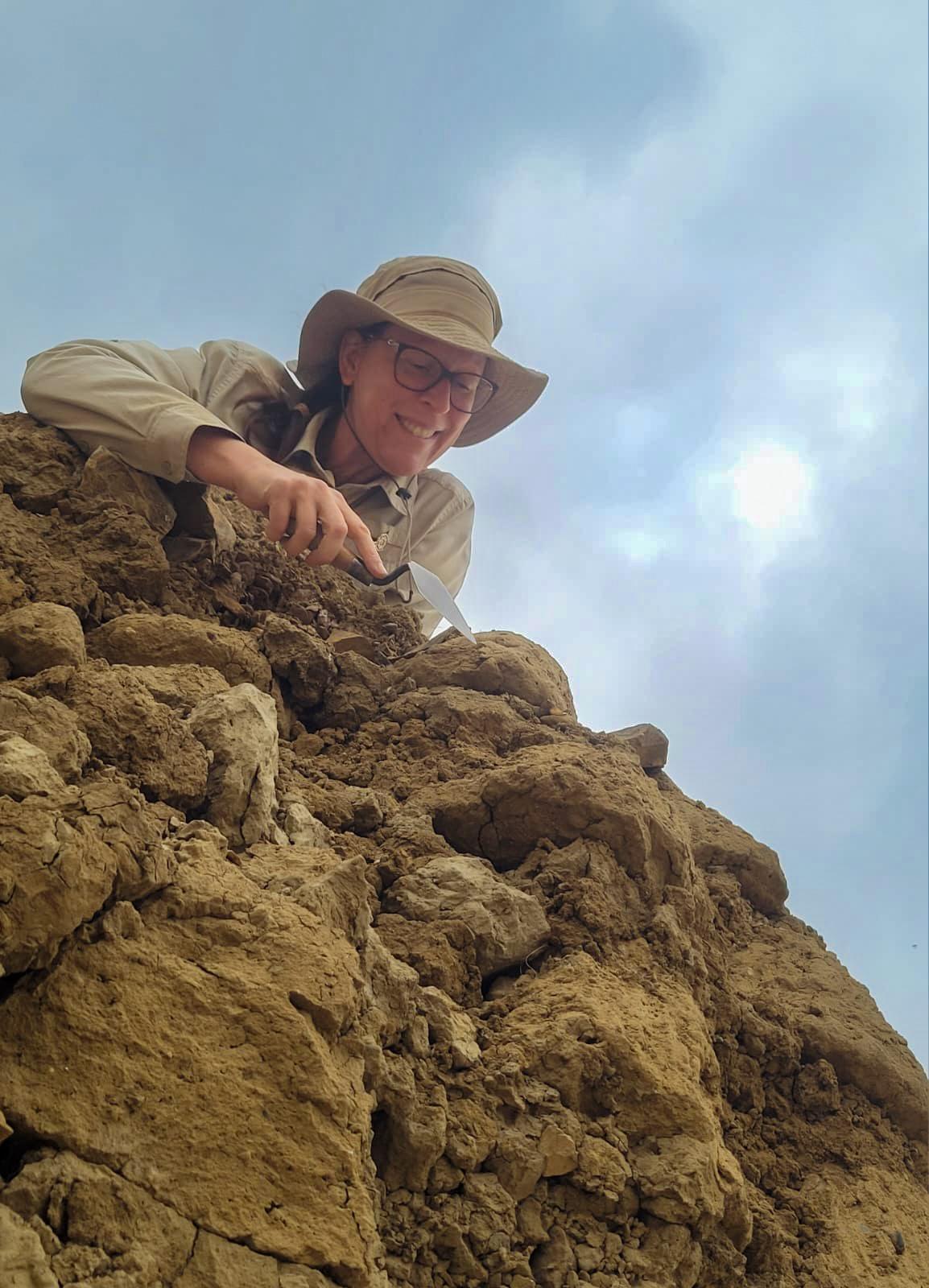
Still image from video by Riley Tavares
Time
(Friday) 4:30 pm - 6:30 pm
Location
Columbia University, 807 Schermerhorn Hall
807 Schermerhorn
Event Details
Robyn Cutright (W. George Matton Professor of Anthropology, Centre College) "Beyond Ruins and Relics: Thoughts on Teaching Archaeology Through Daily Lived Experience" Friday, March 27,
more
Event Details
Robyn Cutright
(W. George Matton Professor of Anthropology, Centre College)
“Beyond Ruins and Relics: Thoughts on Teaching Archaeology Through Daily Lived Experience”
Friday, March 27, 2026, 4:30 PM – 6:30 PM
807 Schermerhorn Hall
Register Here
Please note that all non-Columbia University affiliates must register for a QR campus access code.
The seminar will also be available on Zoom
Abstract
Most students in an introductory archaeology course will never take another course in the field. What is essential for students to learn about our discipline and our past in this one semester? And how can we teach a field with archaeology’s temporal depth, geographical breadth, and variety of lived realities to students in a windowless lecture hall? In this talk, I discuss how my recent book, Excavating Pedregal: Archaeological Explorations of Conquest and Daily Life in Ancient Peru, attempts to address these questions. I will discuss how the choices I make in the book reflect what I see as some of the pressing concerns in teaching archaeology at the present moment. In particular, I attempt to portray archaeology as a process of scientific inquiry, but also a lived experience, and a conversation about the past that is at its best when we collaborate across borders and identities. I suggest that the archaeology of the mundane—daily life, food, household practice—may be particularly well-situated to counter misconceptions about archaeology and engage students in connecting their own experiences in empathetic ways with people in the past.
Biography
Robyn is the W. George Matton Professor of Anthropology at Centre College and an archaeologist who conducts research on the north coast of Peru. Her teaching focuses on Latin America, domestic life and cuisine in ancient states, the Andes and South America, food and culture, and human-environment interactions. I often teach study abroad courses in Peru and elsewhere in Latin America, and enjoy mentoring undergraduate research. One of her favorite parts of teaching at Centre is being able to work with engaged students to learn new things, both in traditional class formats and in hands-on activities in and out of the classroom.
Her research focuses on everyday life on the north coast of Peru during the Late Intermediate Period (~1000-1400 AD), using a culinary perspective to explore the experiences and strategies of local rural communities in the Jequetepeque and Chira valleys as they were incorporated into the expansive Chimu empire. She is the author of two books: Excavating Pedregal: Archaeological Explorations of Conquest and Daily Life in Ancient Peru (Routledge, 2026) and The Story of Food in the Human Past: How What We Ate Made Us Who We Are (University of Alabama Press, 2021). Robyn is currently the Editor of Nawpa Pacha: the Journal of the Institute of Andean Studies.
Time
(Friday) 4:30 pm - 6:30 pm
Location
Columbia University, 807 Schermerhorn
807 Schermerhorn