
Encounters in Sacred Space
Tashi Chödrön, February 2026
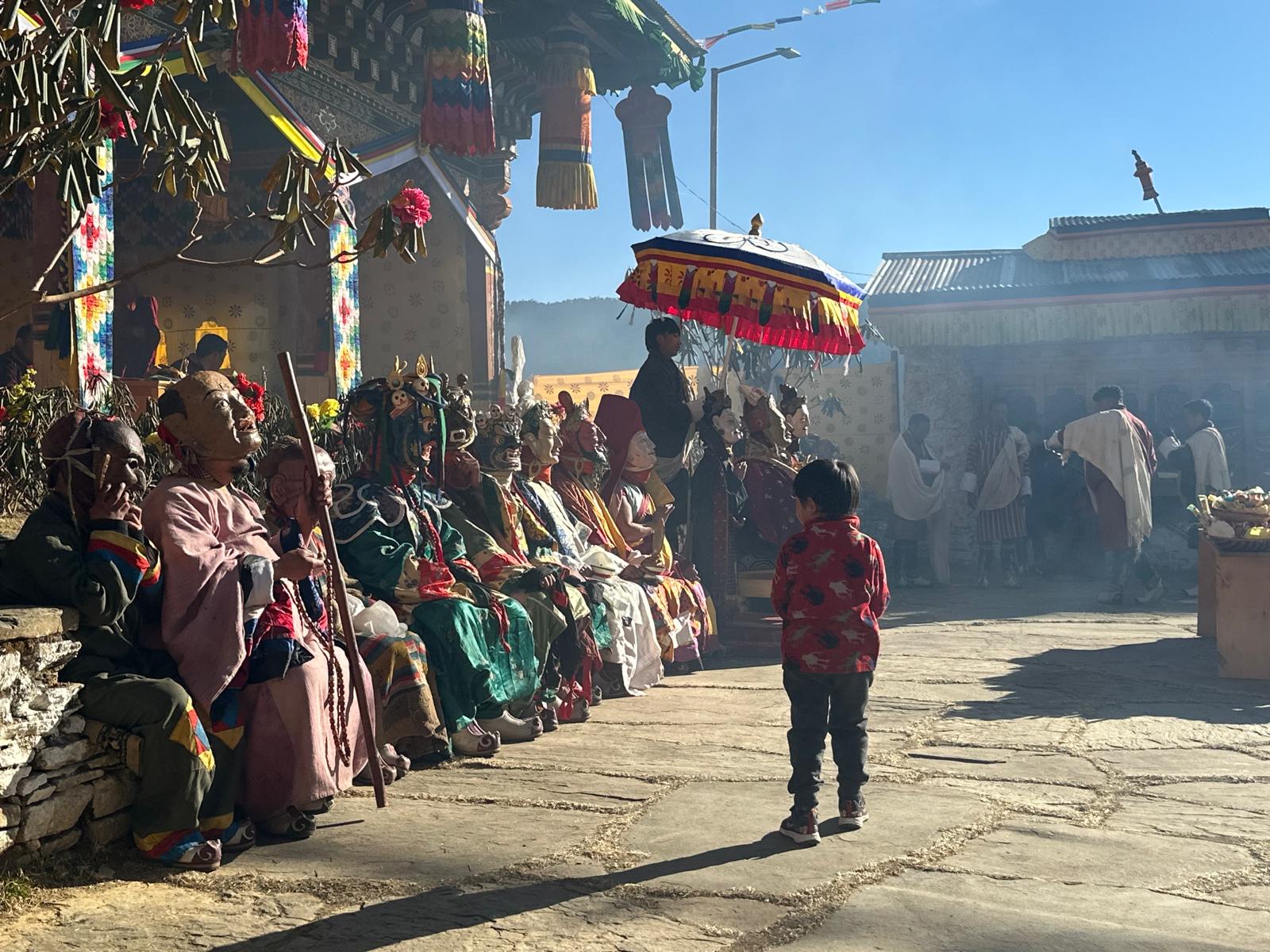
At annual festivals across the Himalayas, families encounter figures from folklore, history, and protectors of the divine landscape surrounding them. A full calendar of rituals, prayers, gatherings and preparations culminate in hours of ritual dance known as Cham (འཆམ་).
For audiences, it is a sensory feast. You feel the percussive music in your bones, smell purifying juniper incense, see swirling brocades and wrathful faces, react to jesters enforcing rules with slapstick comedy, and ultimately rush forward to receive blessings.
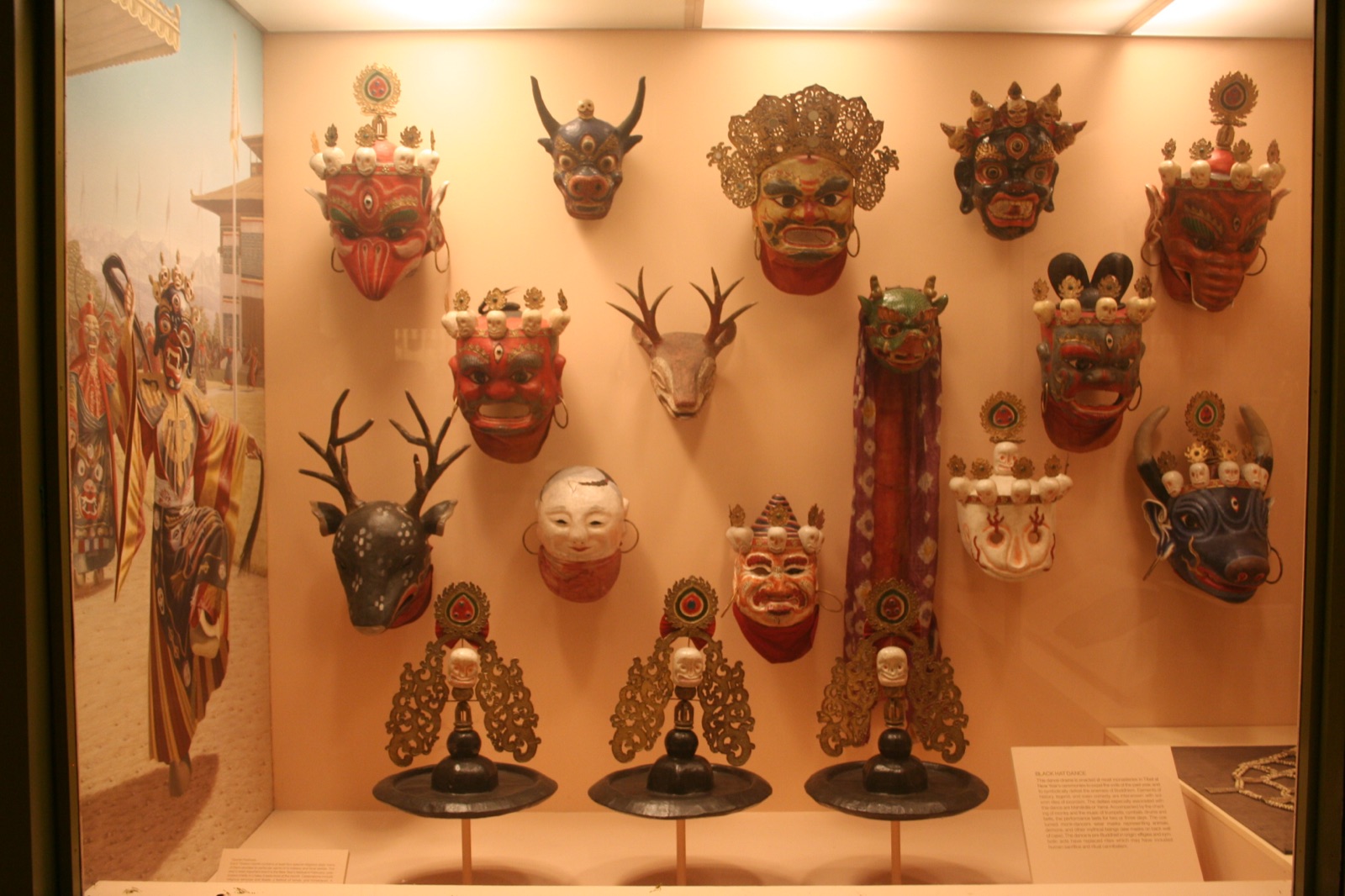
At the American Museum of Natural History, a large collection of Cham masks showcases the diversity and stories behind some of these captivating traditions. In 2026, Cham practitioners and student research bring a display of historical masks to life.
A Living Legacy
The performance of Cham ritual dances is a part of Tibetan Buddhism (བོད་ཀྱི་ནང་བསྟན་). Buddhist teachings connect diverse Himalayan communities—including those in Bhutan, Nepal, Ladakh, Sikkim, and Arunachal Pradesh—as well as those across China, India, and the world. It has shaped religious and social life along the Himalayas and the Tibetan Plateau since the 700s. Shared ritual practices, teachings, and pilgrimage shape daily life, artistic expression, and relationships with the natural environment.
Tibetan Buddhist Beliefs
Tibetan Buddhism's core spiritual goal is to realize impermanence and liberate beings from the Cycle of Suffering (Saṃsāra). Practitioners cultivate compassion and seek to overcome ignorance, attachment, and anger through study, meditation, and ritual. Those on the path seek guidance from teachers who received their instruction in lineages traced back through saints, scholars, divine protectors, and enlightened figures including the historical Buddha Shākyamuni (ཤཱཀྱ་ཐུབ་པ་ 563–483 BCE).
Ritual practices help maintain the connection between the material and spiritual worlds: offerings, chanting, sound, movement, and interaction with sacred objects make the spiritual realm present and tangible. The Cham dance is one such practice, explored here in more detail.
What is Cham?
A grand public spectacle of sacred masked dance, Cham is performed across the Himalayan region, and beyond. For Tibetan Buddhist communities, it is a religious ritual practice that purifies negative forces, protects the community, and generates spiritual merit.
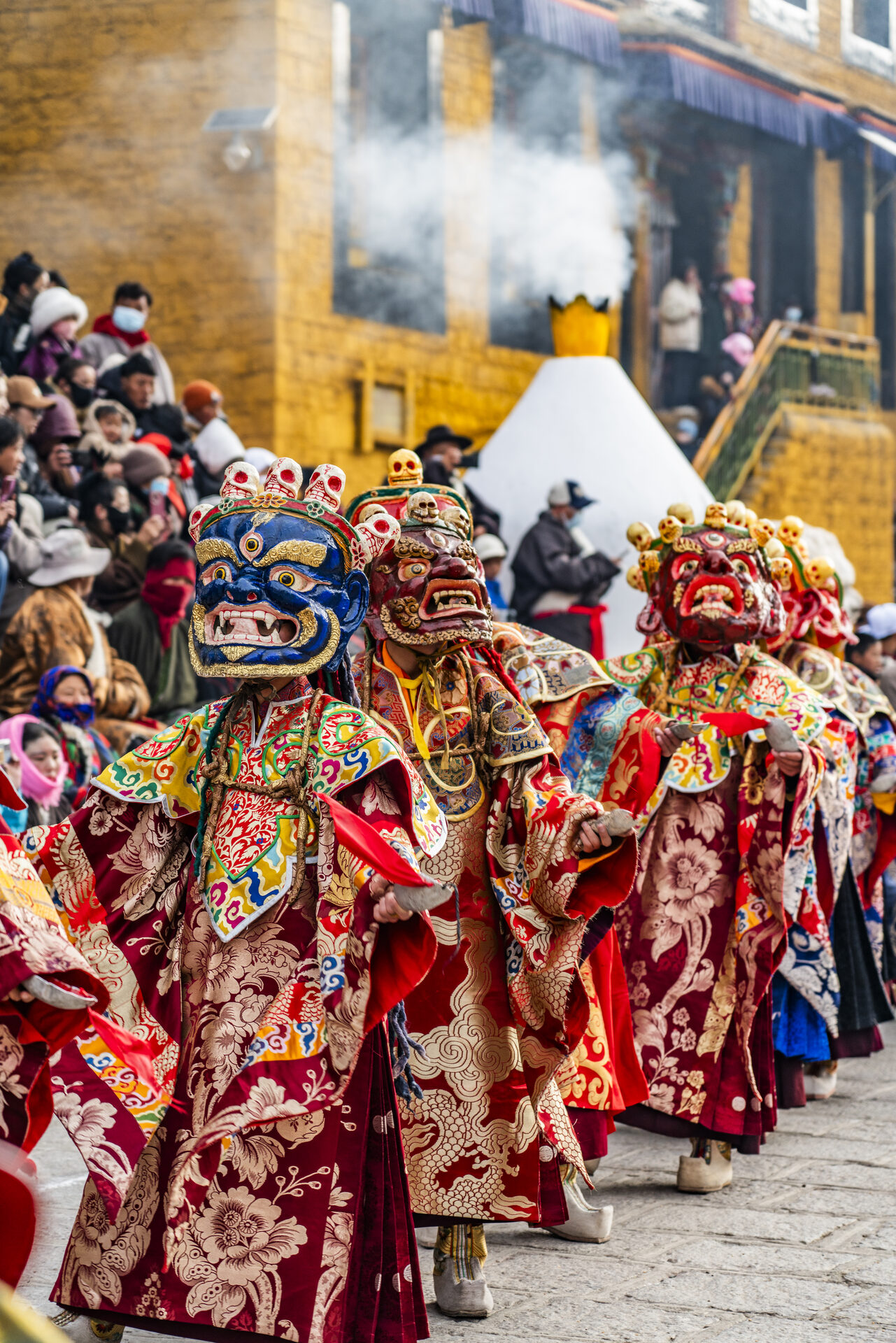
Through carefully choreographed gestures, Cham conveys Buddhist teachings and historical episodes. Dancers wear elaborate masks representing deities, protective spirits, animals, and historical figures. By wearing these masks, they take on the presence of these beings. Accompanied by drums, horns, and cymbals, the dancer's movements help define and purify ritual space while transforming obstacles that may be spiritual, physical, or karmic.
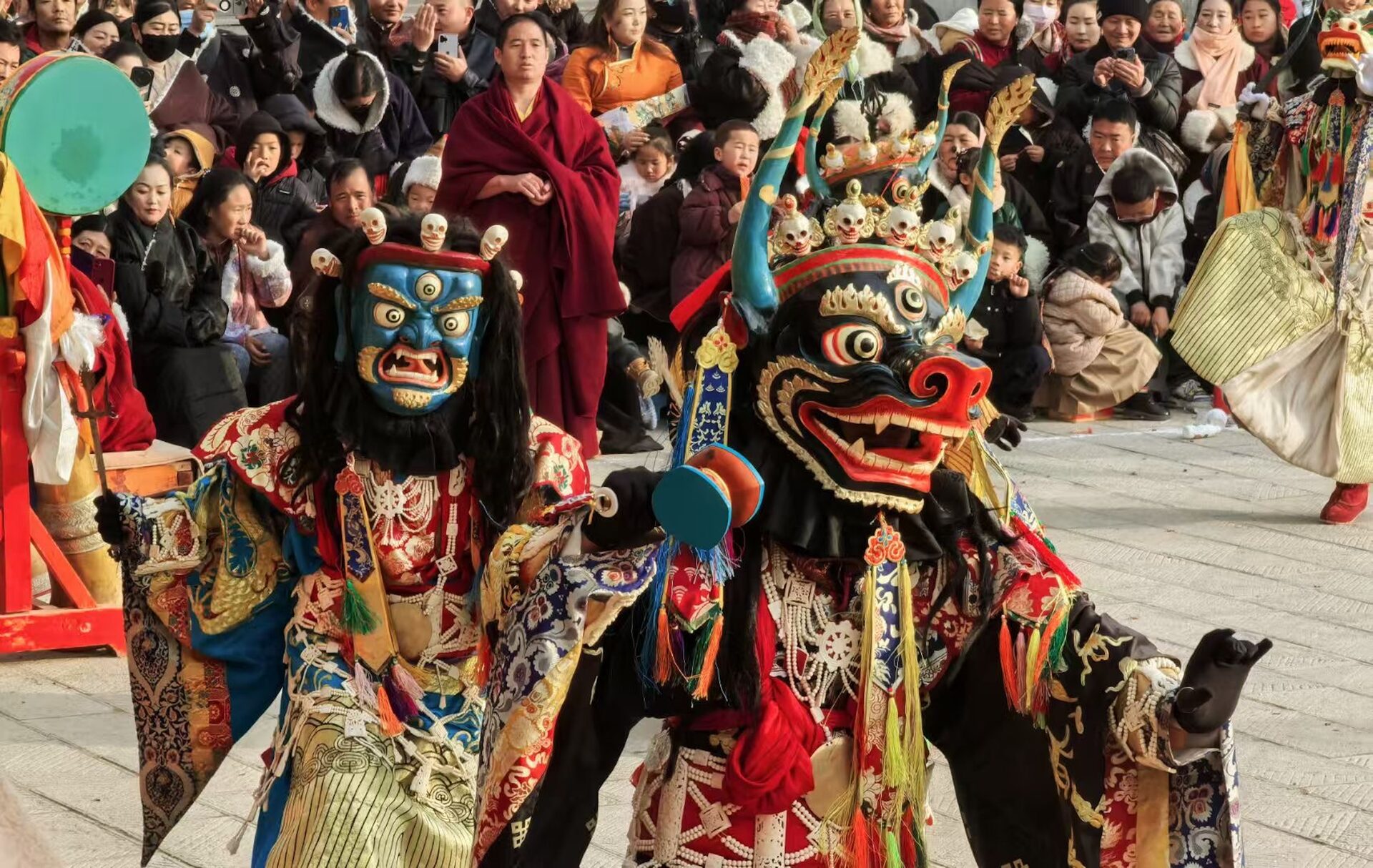
Photo credit: Ming Xue
Unfolding over several days, Cham brings communities together for important religious occasions. It is both a shared ritual experience and a way of transmitting Buddhist values, including the cultivation of wisdom and compassion.
The masks used in Cham are more than decorative objects. They are ritual objects that embody the presence of spiritual beings.
Masks hanging in the Museum offer a possible connection to the living religious traditions from which they come. This website presents these masks in the context of their performance, so that their meaning emerges from the ideas and people they connect.
"On the outside, the dances are for the health of the physical body, but in terms of the mind, the purpose is more profound…
The essential meaning of these dances is the removal and elimination of interfering influences and enemies that harm all sentient beings and (distort) Buddha's teachings."
— Venerable Ngawang Chonjor, Cham dance master, Namgyal Monastery, Dharamsala, India (1990)
A Lively Landscape
Cham rituals enact powerful ties between people, places, and the more-than-human world. As rituals, they recognize and re-establish the relationships between the world of spirits and deities within the monastery courtyard where they are performed. The dancers are most often monks, with ritual knowledge specific to each dance. With sweeping gestures, they move in mandalas—circular patterns that can take on the structure of the universe. All of these movements are about establishing positive control over space and removing malevolent spirits. While Cham has historical ties to ritual dances across the Buddhist world going back to ancient India, Tibetan narratives of Cham emphasize its role in harnessing particularly Tibetan relationships of power.
From a Tibetan perspective, the mountains and plains are inhabited by unruly beings and powerful figures. This image (below), called the Senmo Map (སྲིན་མོ་), vividly depicts a supine demoness splayed across Tibet, unwieldy but pinned down by Buddhist temples atop her heart, joints, hands, and feet. The map is a vision of the semi-tamed landscape of mountains and more-than-human spirits. It illustrates a beloved tale of ancient imperial Tibet's conversion to Buddhism in the 600s. When noble women and skilled Buddhist practitioners from Licchavi Nepal and Tang China brought Buddhist figures to the plateau, the landscape itself seemed to fight them at every turn. Divination and geomancy revealed the figure of the demoness (senmo སྲིན་མོ་), the unruly spirits wrestling against the conversion of the land to Buddhism. The king and these queens then built temples across the land, each one binding one of the limbs of the demoness to protect the people who live across the Tibetan plateau and Himalayas.
This story illustrates how skilled practitioners brought multiple Buddhist influences to the plateau. In the process they transformed the unruly Tibetan landscape and produced uniquely Himalayan traditions of Buddhism.
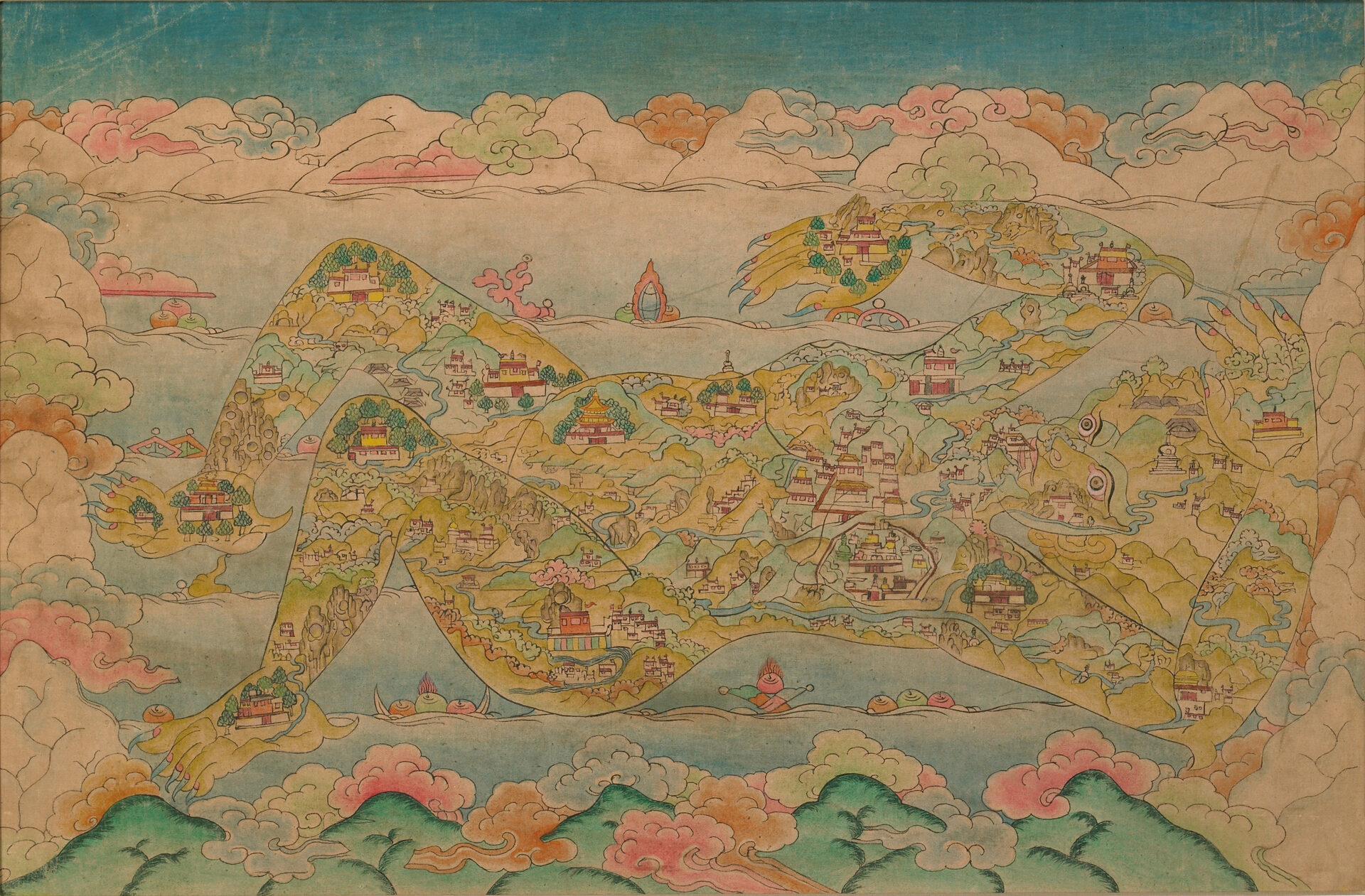
Photo by Bruce M. White, © Rubin Museum of Art
In the Tibetan Buddhist tradition, Cham dances built on these rituals to bind the spirits of the land and turn them into Buddhist protectors. A century after the first temples were built, Emperor Trisong Detsen (ཁྲི་སྲོང་ལྡེ་བཙན r. 755–797) sought to establish the first monastery in Tibet, inviting monks from India to initiate the new community. Yet their work was halted by worldly obstacles: smallpox ravaged the city and laypeople blamed the invited foreign monastics. The king invited Padmasambhava (གུ་རུ་རིན་པོ་ཆེ་), an adept who had performed miracles and turned communities to the dharma all across the Himalayas, to Lhasa. Consulting geomancy and texts, Padmasambhava subdued the negative forces through the first Cham dance. Finally, Samye Monastery established Buddhist monastic institutions and community (sangha) in Tibet.
Today, Cham is performed at rituals and festivals throughout the year to continue binding demons and evil spirits and to protect the communities that live there. For many Tibetans, their relationship to the landscape is one of ongoing recognition of its power and potential. Cham dances also became elaborate spectacles that could give lay audiences insight into the more-than-human world, and glimpses of the figures they would encounter in the passage between lives.
Who's Involved in Cham?
Three communities shape every Cham performance — those who make the masks, those who dance, and those who witness.
iMakers
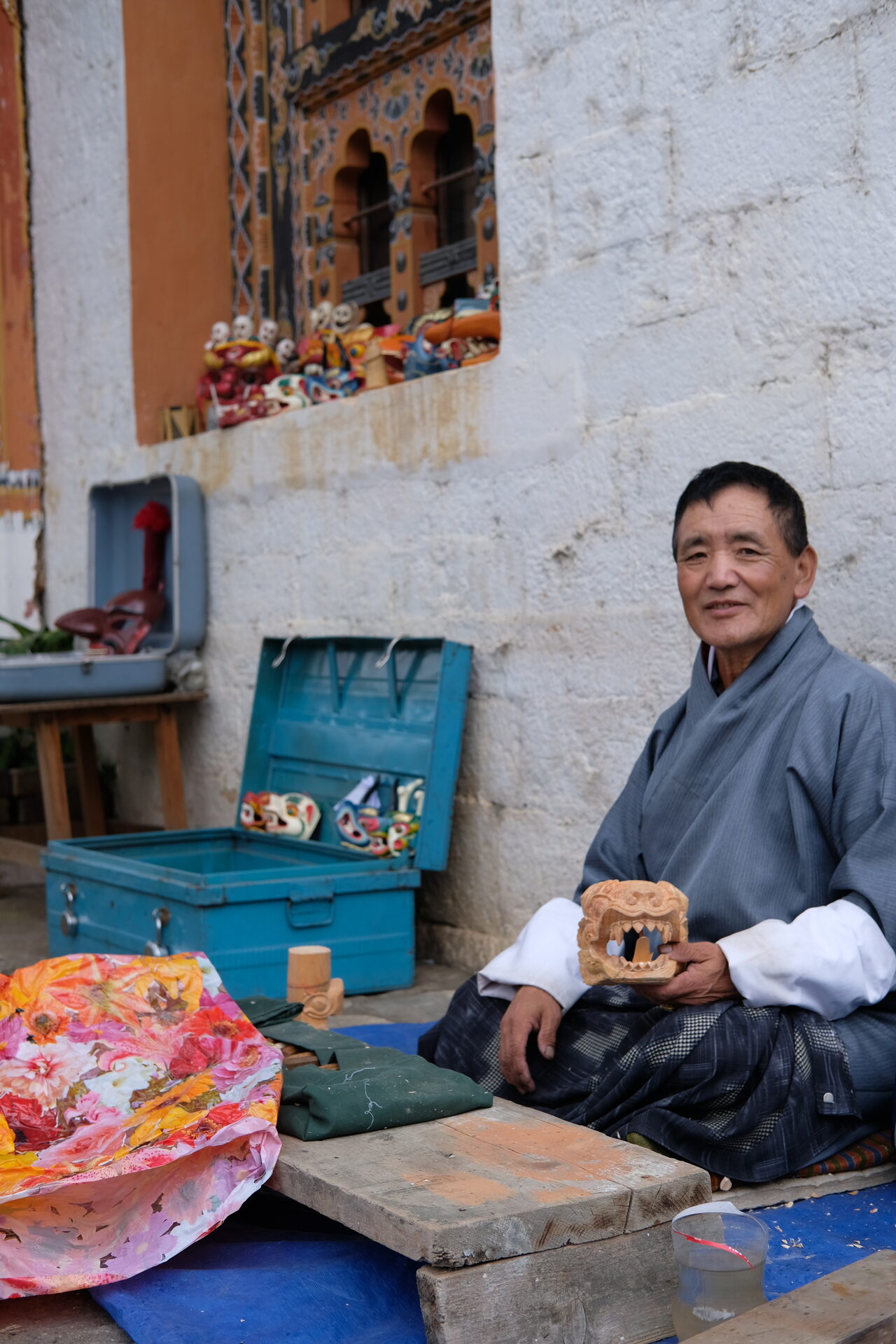
Village artisans make Cham masks and costumes for the monasteries and often make additional masks for the tourist market or home shrines. The characteristics of each mask are described in scriptures, yet the style of the character—and even which characters are included—can vary widely across the region. Masks for dancing can be made from lightweight papier-mâché or plaster which is pressed over a sculpted clay mold of the divine figure's face. In some areas, including Bhutan, the masks for dances are most often carved from wood, sometimes assembled from multiple pieces that fit together. Once the masks are shaped, they are painted and decorated with fabric and ornaments. For masks that feature divine characters, a consecration ceremony opens the eyes of the mask with a talisman on the back.
As decoration, masks can offer a protective presence to the faithful or a memorable souvenir to the many tourists who attend Cham dances.
iiPerformers
iiiWitnesses
"It's something of your being, you become a part of it. You can feel the community surrounding it, the sky, and the mountains, all parts of our valley are also present, so that's a very powerful experience."
— Dr. Tashi Dekyid Monet (མོ་ངེ་བཀྲ་ཤིས་བདེ་སྐྱིད།), is a Tibetan Scholar, Writer, and Educator working on Indigenous place-based and environmental knowledge from Minyak on the eastern Tibetan plateau.
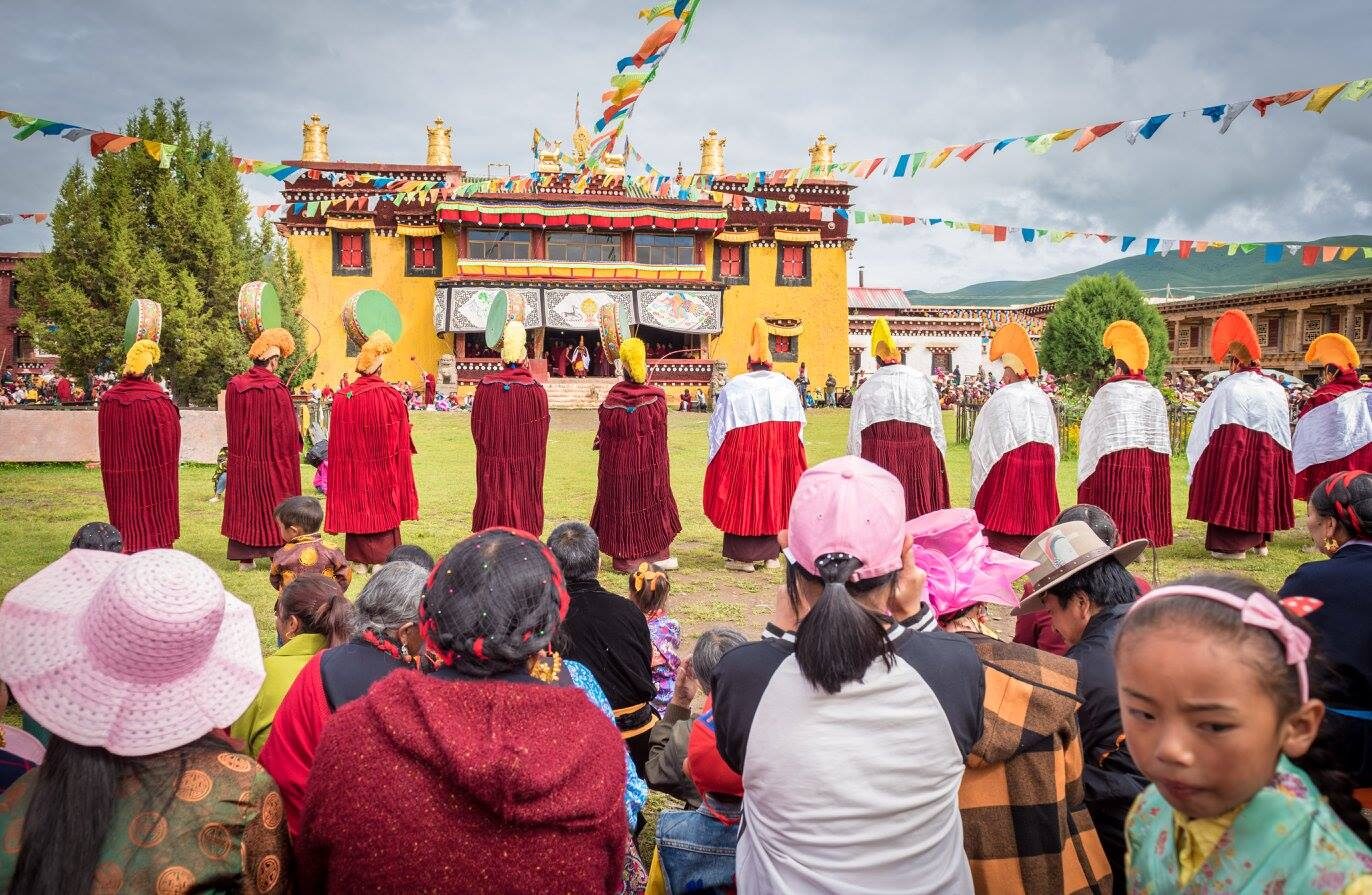
To witness a Cham dance and receive its blessings is a devotional act, and promises blessings to those present. For the faithful, even the chance to glimpse these sacred performances is a thongdrel (མཐོང་དྲེལ་), a chance to be liberated from karmic debt through a moment of pure realization.
The sensory presence of Cham invites everyone to experience an overwhelming sense of connection to what transpires.
The festivals are also social occasions. People enjoy the food offered by volunteers that is cooked in large batches to feed everyone; they catch up with friends, joke, and flirt. Jokester characters playfully provoke the audience—but they also enforce the rules and respect for the ritual itself. Such events pass traditions down to younger generations.
Protective Deities in Cham
Many of the masks represent different protector deities who destroy negativity. Masked dancers embody these divine characters through Cham performance. Here is a closer look at three Cham masks in the Museum.
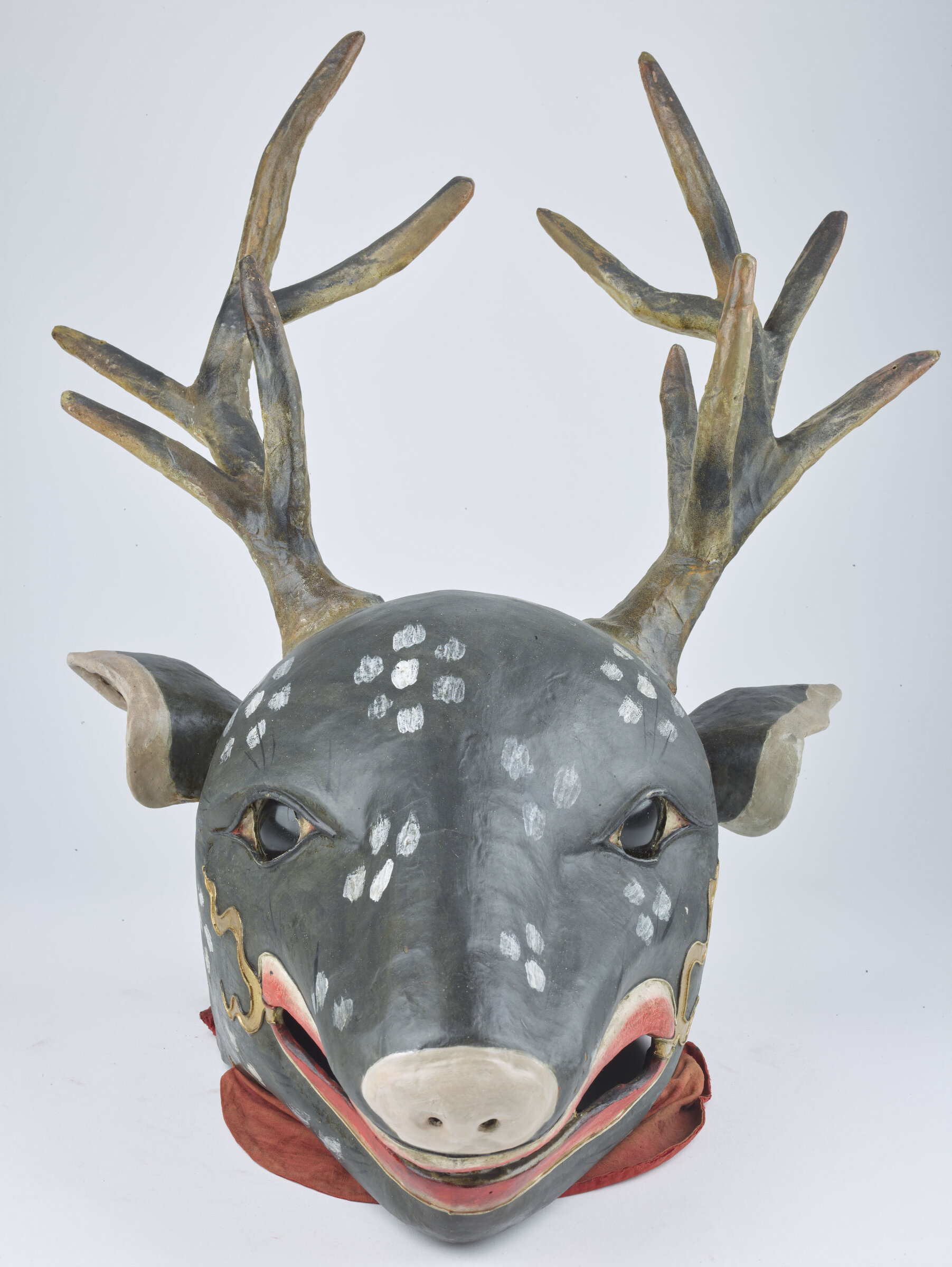 Shawa (ཤྭ་བའི་འཆམ་འབག)The Deer · Assistant to Yama
The Shawa mask represents the deer assistant to the lord of death, Yama. This character clears away obstacles during the Cham performance. Practitioners focus negative energy into an effigy which the Shawa dancer then destroys by thrashing his sword or antlers in the air. The Shawa dance features lively and leaping movements to mimic the natural behavior of a deer. The eyes and antlers of the mask are enlarged so that audience members can see the dramatic details of the Shawa mask from afar.
Watch this video of the Shawa Dance from Palpung Sherab Ling Monastery in India.
Shawa Cham — Leaping Deer. Palpung Sherab Ling Monastery, courtesy of Tsering Wangmo.
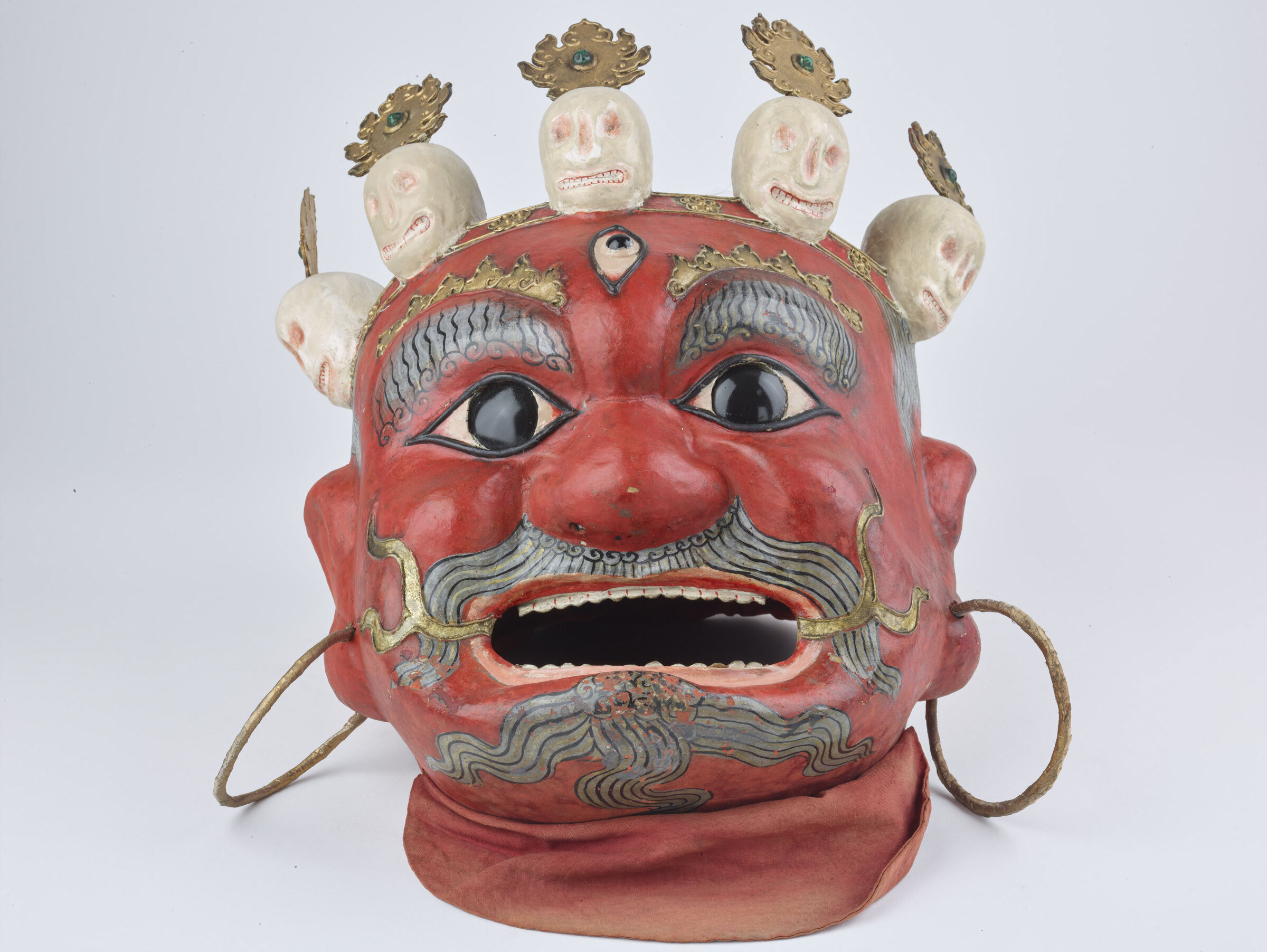 Guru DrakMar (གུ་རུ་དྲག་མར་གྱི་འཆམ་འབག)The Red Guru · Wrathful Padmasambhava
The Guru DrakMar mask portrays a wrathful manifestation of Padmasambhava, the influential Buddhist teacher credited with bringing Buddhism to Tibet and the Himalayan region in the 700s CE. In this form, known as the 'Red Guru', Padmasambhava appears fierce and powerful, with a red face, glaring eyes, and a crown of skulls. These features symbolize his ability to subdue demons and transform negative forces into wisdom, reflecting the protective and transformative power attributed to his revered spiritual figure.
Watch a video of a Guru DrakMar dance being performed in the museum.
AMNH Anthro Cham Demo — Guru DrakMar dance, 2026.
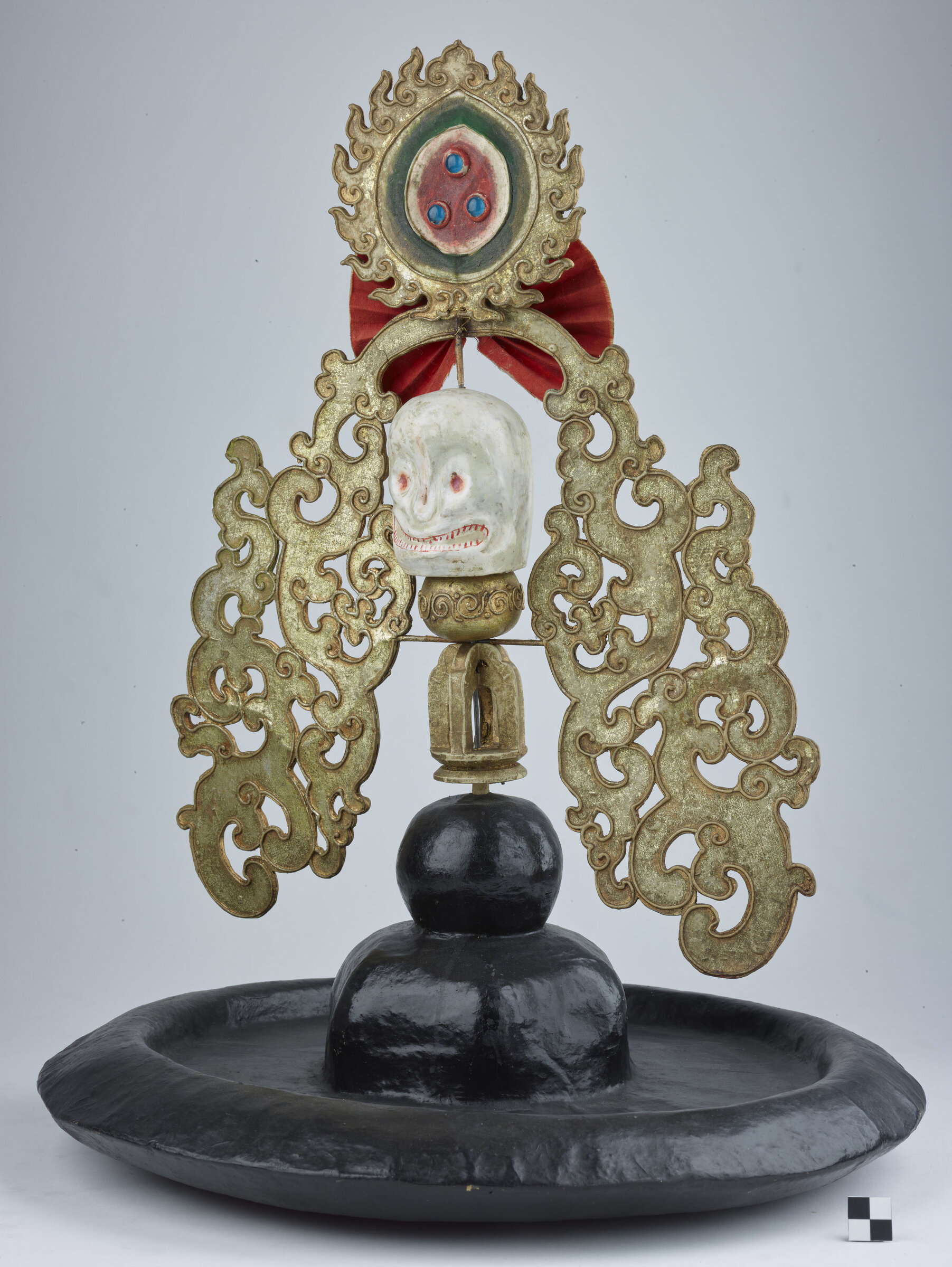 ZhaNag (ཞྭ་ནག་)The Black Hat · Return of Buddhism
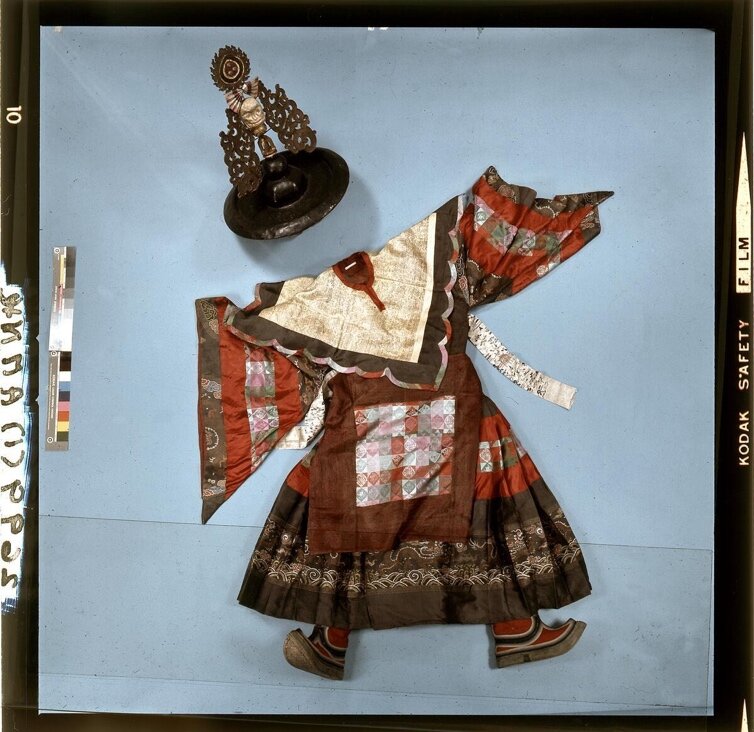
This dance depicts the return of Buddhism after the ruthless king Langdarma (དར་མ་འུ་དུམ་བཙན 800s CE) was defeated by the heroic Lhalung Pelgyi Dorje (ལྷ་ལུང་དཔལ་གྱི་རྡོ་རྗེ 800s CE), a Tibetan Buddhist monk who was first depicted in this ritual dance. In the ZhaNag (ཞྭ་ནག་) dance today, the dancers wear sorcerer costumes of black hats and wield ritual implements. The black hat dancers are involved in the destruction of linga (ལིངྒ་།) which is a physical representation of negative spirits (དམ་སྲི་) and obstacles (བར་ཆད་). The Museum's papier-mâché masks were made by a mask maker at the Yonghe Gelugpa temple in Imperial Beijing, where they were used around 1900.
Watch a video of a ZhaNag dance being performed in Bhutan.
Masks in 3D — Explore the Ritual Objects
Move the cursor to examine three masks in the AMNH collection. The animated preview rotates automatically; click through for the full interactive viewer where you can orbit, zoom and pan the scene.


The Laufer Expedition
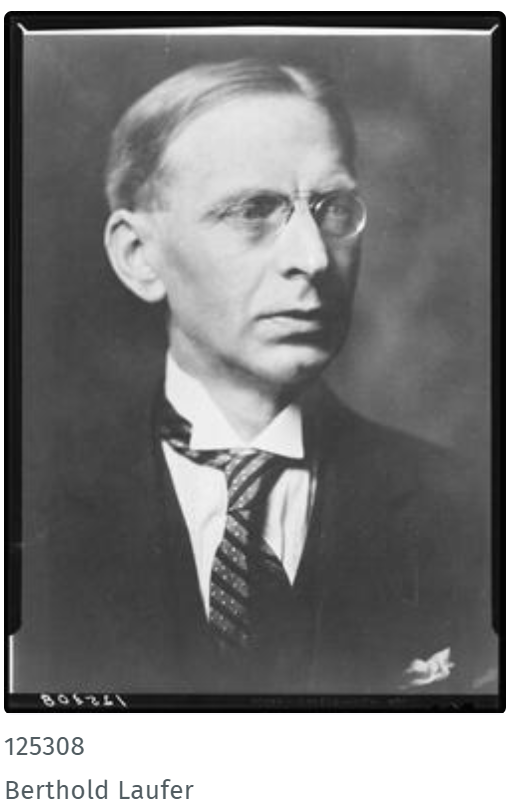
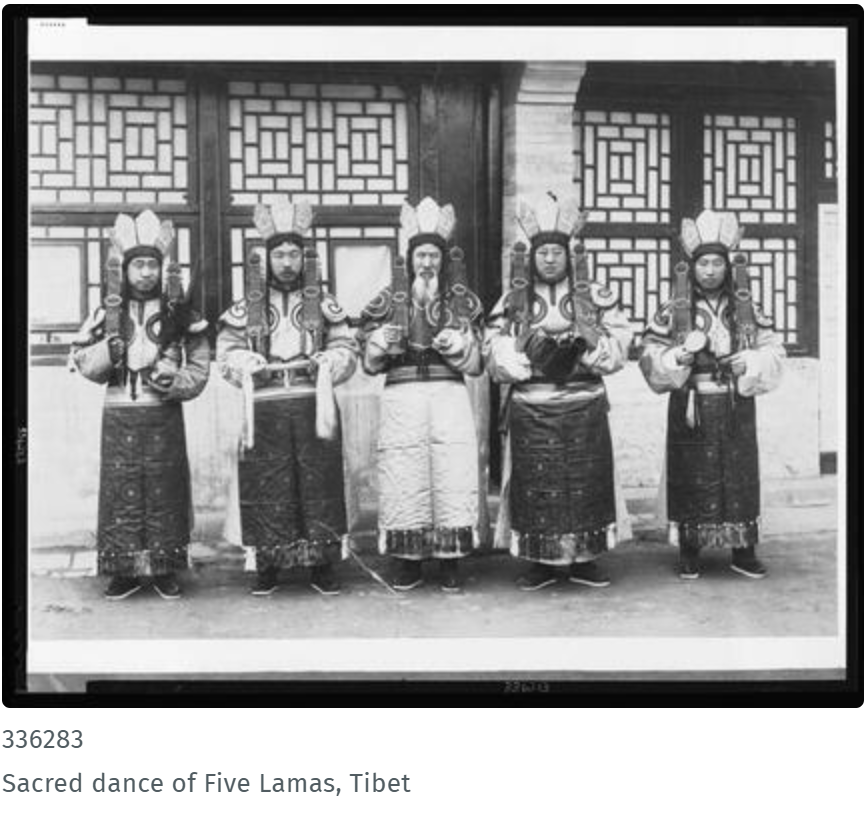
The ethnologist Berthold Laufer (1874–1934), literate in Tibetan and Chinese, went to China on the Jacob H. Schiff expedition (1901–1904) organized by Franz Boas to improve American appreciation for Asian culture. Laufer collected the three Cham masks below, featured in the AMNH exhibit, at Yonghe Temple (雍和宮) in Beijing, China. Other Cham masks in the Museum's collection were collected by the missionary H. B. Marx in Puh, in the Spiti Valley of Ladakh, India. Laufer examined and purchased Marx's masks for the museum in 1925. One mask on display at AMNH was gifted to the museum by the British traveler and collector Dr. Walter L. Hildburgh in 1928. Looking at these together, they were all collected at entry points to the Tibetan plateau, along trade routes that connected the Himalayan world.
Bringing Cham to The American Museum of Natural History
The masks on display last danced more than 100 years ago. Exploring how to bring these belongings back to life, we invited New York Tibetan community members to the museum to demonstrate Cham dance. They performed just before Losar, the Tibetan New Year, in order to purify the negative forces and begin again with blessings.
Lopon Sangye from the Nyingma Palyul Center in Queens performed Cham in the atrium of the Gilder Center for Science, Education, and Innovation in the American Museum of Natural History, February 2026. Photo and video courtesy of Tierney Brown.
Resources
- Dawa Lokyitsang (September 2015). When Women Ruled Tibet. Lhakar Diaries. lhakardiaries.com
- Kalzang Dorjee Bhutia (2022). Can Pollution Bring Balance to the Hidden Land? Fibreglass Interventions in the Ecology of Sikkimese Cham. The Copenhagen Journal of Asian Studies, 40(1), 45–65.
- Mills, Martin (October 2016). The Demoness of Tibet. Spiral, Rubin Museum of Art. rubinmuseum.org
- Samuel, G. & David, A. R. (2016). The Multiple Meanings and Uses of Tibetan Ritual Dance: "Cham" in Context. Journal of Ritual Studies, 30(1), 7–24.
Conclusion & Credits
A shared classroom, a shared ritual.
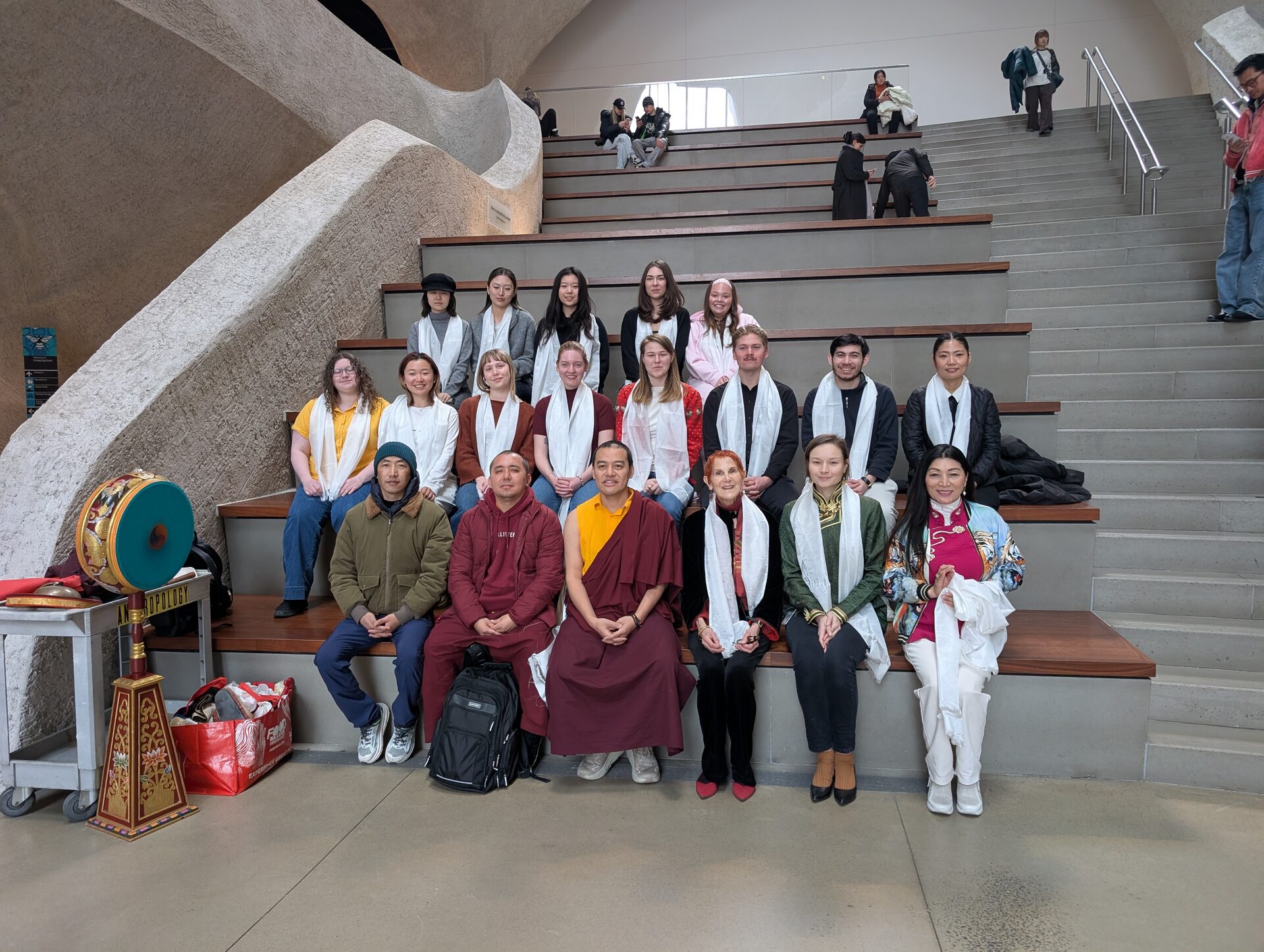
MUSA 2025–2026 · Curating, Writing, Exhibit Design
- Brandon Chavez
- Megan Connoley
- Annika Dillon
- Yixiao Duan
- Izetta Evans
- Jeremy Fitzgerald
- Yvonne Gu
- Sarah Palluconi
- Amanda Porter
- Emma Riddle
- Stephanie Wu
- Yue (Chelsea) Yu
Professors
- Laurel Kendall — Senior Curator in Residence, Division of Anthropology, AMNH; Adjunct Professor, Columbia University
- Ciné Ostrow — Associate Director of Design, AMNH; Adjunct Professor, Columbia University
- Tierney Brown — Ho Family Foundation Buddhism Public Scholar at AMNH; Adjunct Professor, Columbia University
Editor & Design
- Allison Hollinger — Exhibition Researcher/Writer
- Jennifer Dillon — Exhibit Graphic Design
- An-Kai Cheng — Web Designer
AMNH Division of Anthropology
- Alex Lando — Senior Museum Technician
- Barry Landua — Systems Manager and Manager of Digital Imaging
- Kristen Mable — Anthropology Archivist
- Katherine Skaggs — Senior Museum Specialist, Asian Ethnology
- Laila Williamson — Division of Anthropology, Scientific Specialist Emeritus
- Ming Xue — Research Associate
AMNH Library
- Margaret Grumeretz — Digital Archivist
- Rebecca Morgan — Special Collections Archivist
- Gregory Raml — Special Collections Librarian
- Mai Reitmeyer — Senior Services Librarian
Special Thanks
- Tashi Chödrön, Rubin Museum of Art
- Tashi Dekyid Monet, PhD — Columbia University Post-Doctoral Fellow
- Nyingma Palyul Dharma Center, Queens
- Tobgye, Pema Dema, and Dorji Drukgyel — in Bhutan
- Tsering Wangmo — Washington University, St. Louis
- Eozin Che — Digital Product Lead, Science Visualization and Public Engagement, AMNH
- Liu Shuoxiang
- Brian Boyd — Director, Museum Anthropology M.A. Program; Senior Lecturer in the Discipline of Anthropology; Co-Director, Center for Palestine Studies at Columbia University; Co-Chair, Columbia University Seminar on Human-Animal Studies
Support
This project was made possible with the generous support from both the Columbia University Department of Anthropology and the Institute for Social and Economic Research and Policy, as well as in-kind support by the American Museum of Natural History.


1200 Amsterdam Ave., MC 5523, New York, NY 10027 · archaeology@columbia.edu